
One tank. Two jobs.
The whole-home system sits where water enters your house. Carbon takes out the chlorine taste and smell. Resin takes out the hardness that leaves scale.


From the kitchen tap to the whole house, we’ll help you figure out which water filter fits your home.
The whole-home system sits where water enters your house. Carbon takes out the chlorine taste and smell. Resin takes out the hardness that leaves scale.
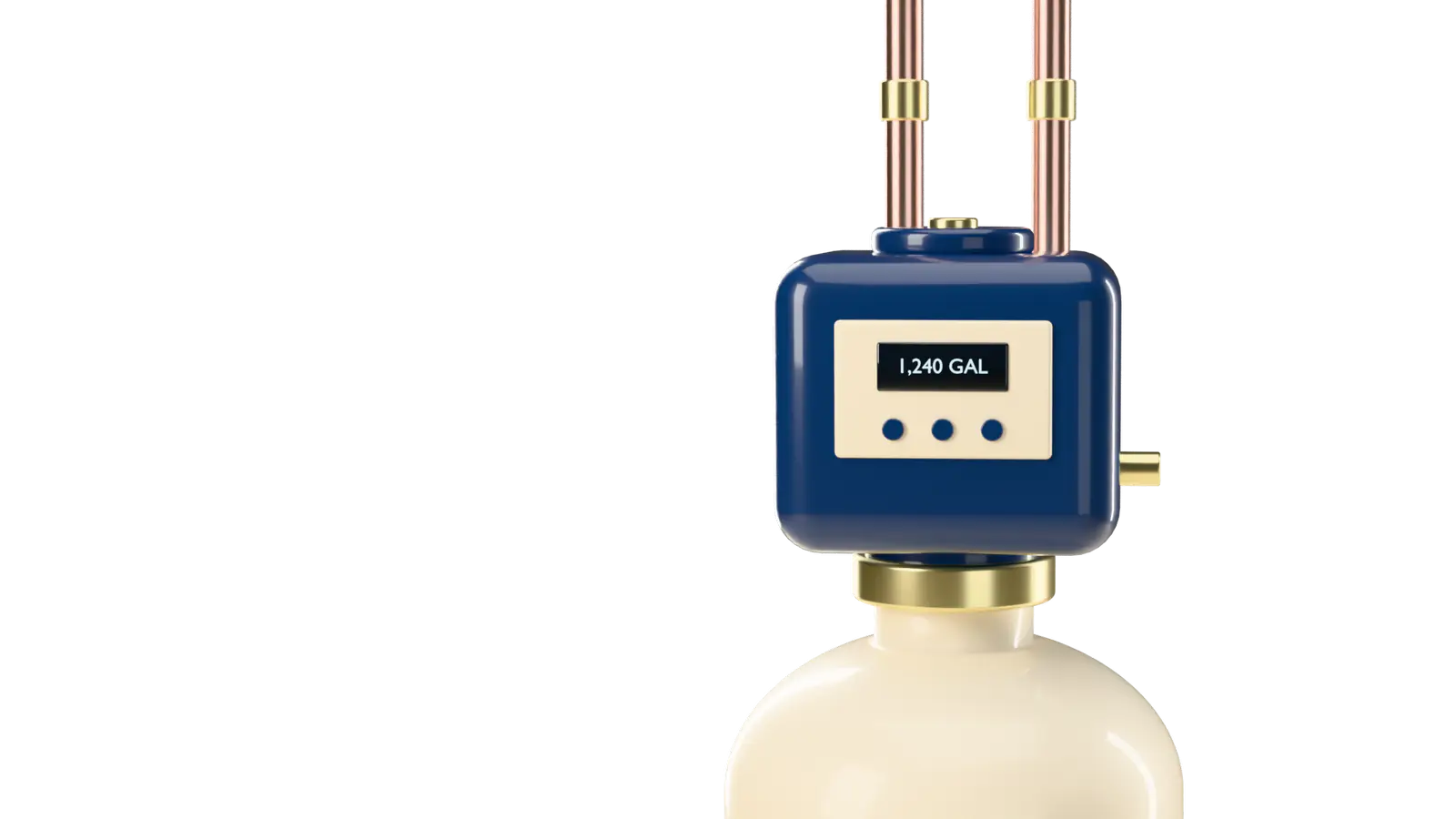
It meters the water you use and rinses the bed clean on its own, so there’s no schedule to remember.

Water runs down through three layers, then back up the centre tube and out to the house.
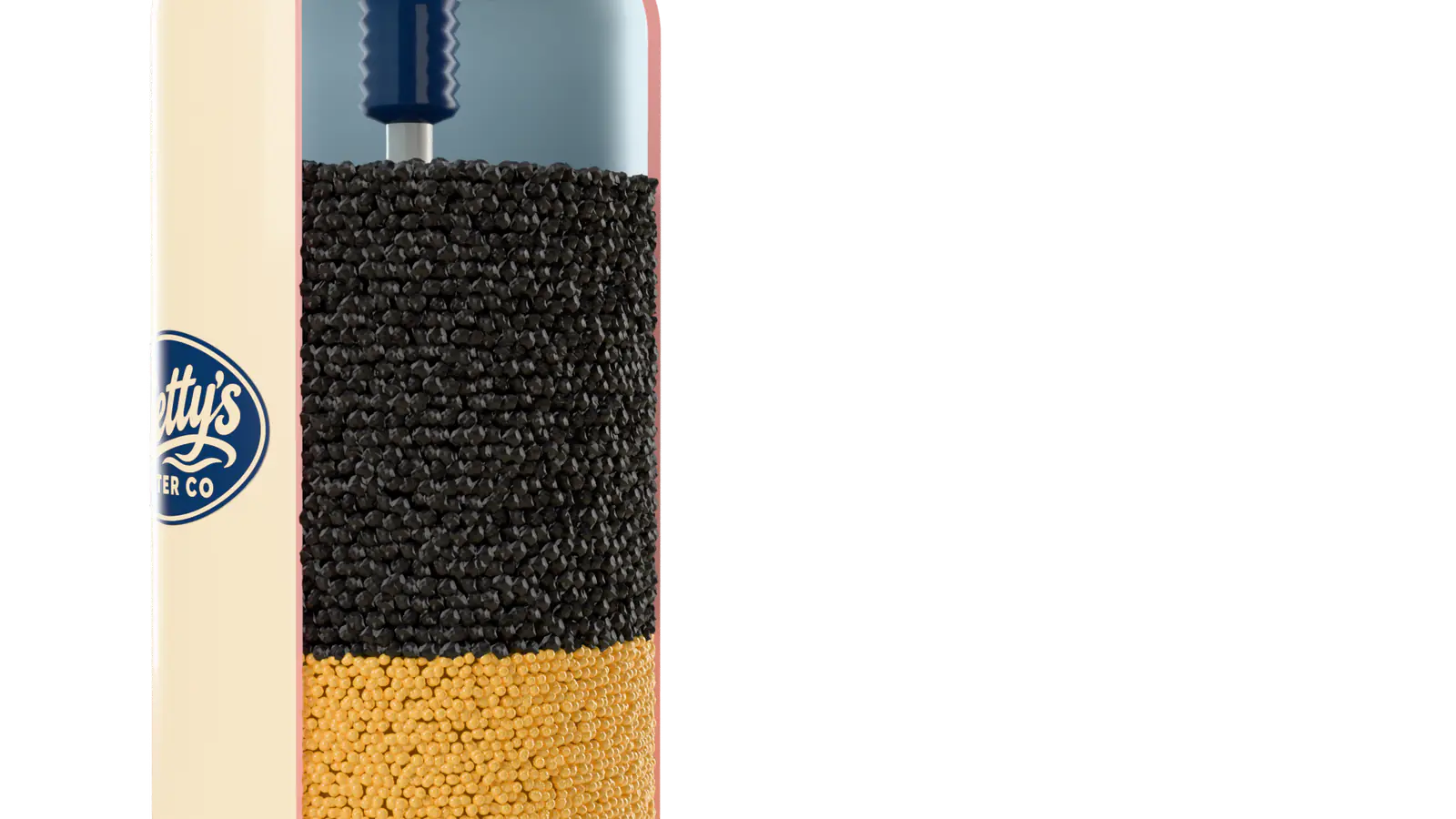
Activated coconut-shell carbon. Chlorine clings to it, so the pool smell stays out of your shower and your coffee.
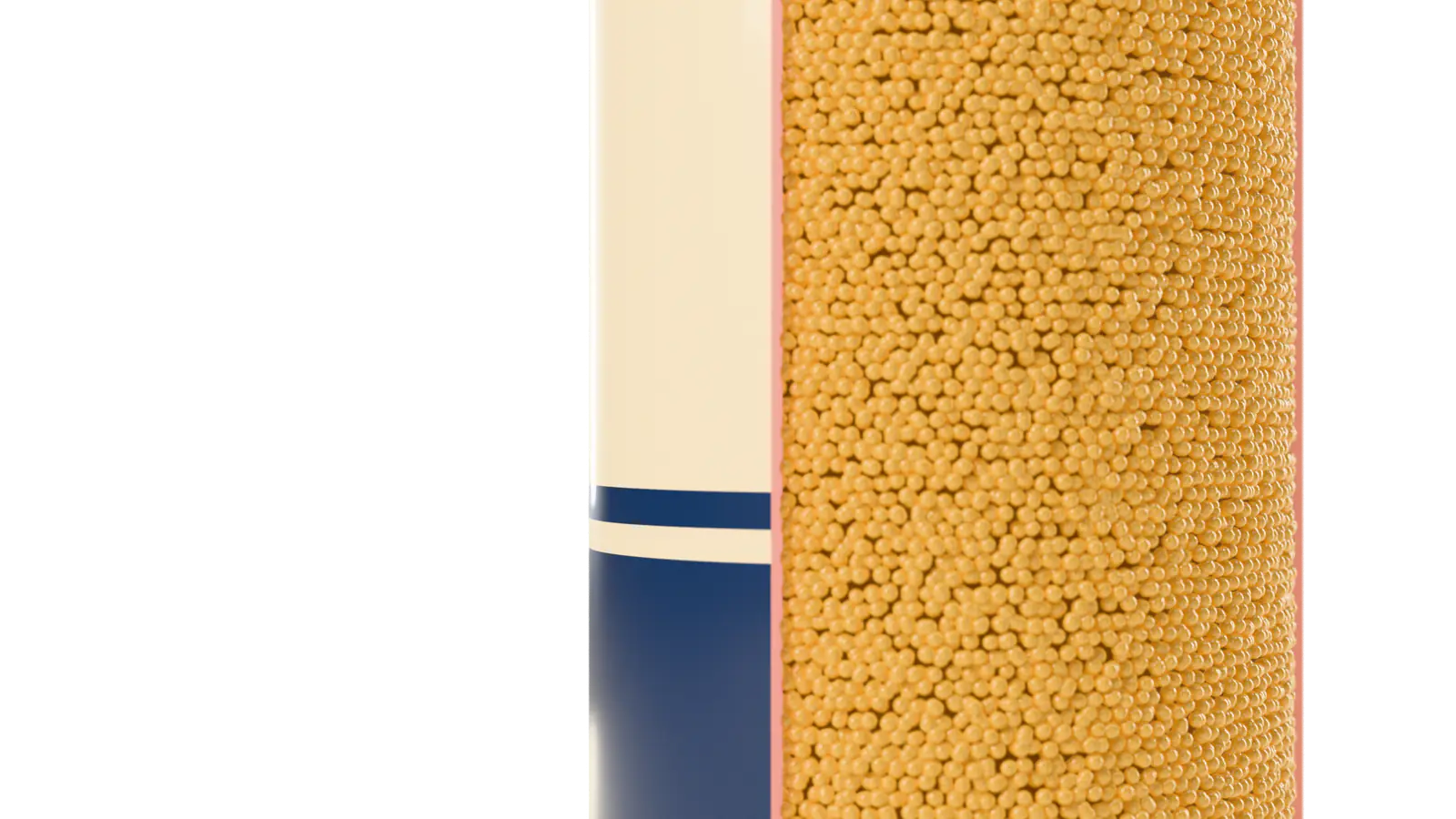
A deep bed of small beads trades the calcium and magnesium that make water hard for sodium. Less scale, fewer spots, soap that lathers.
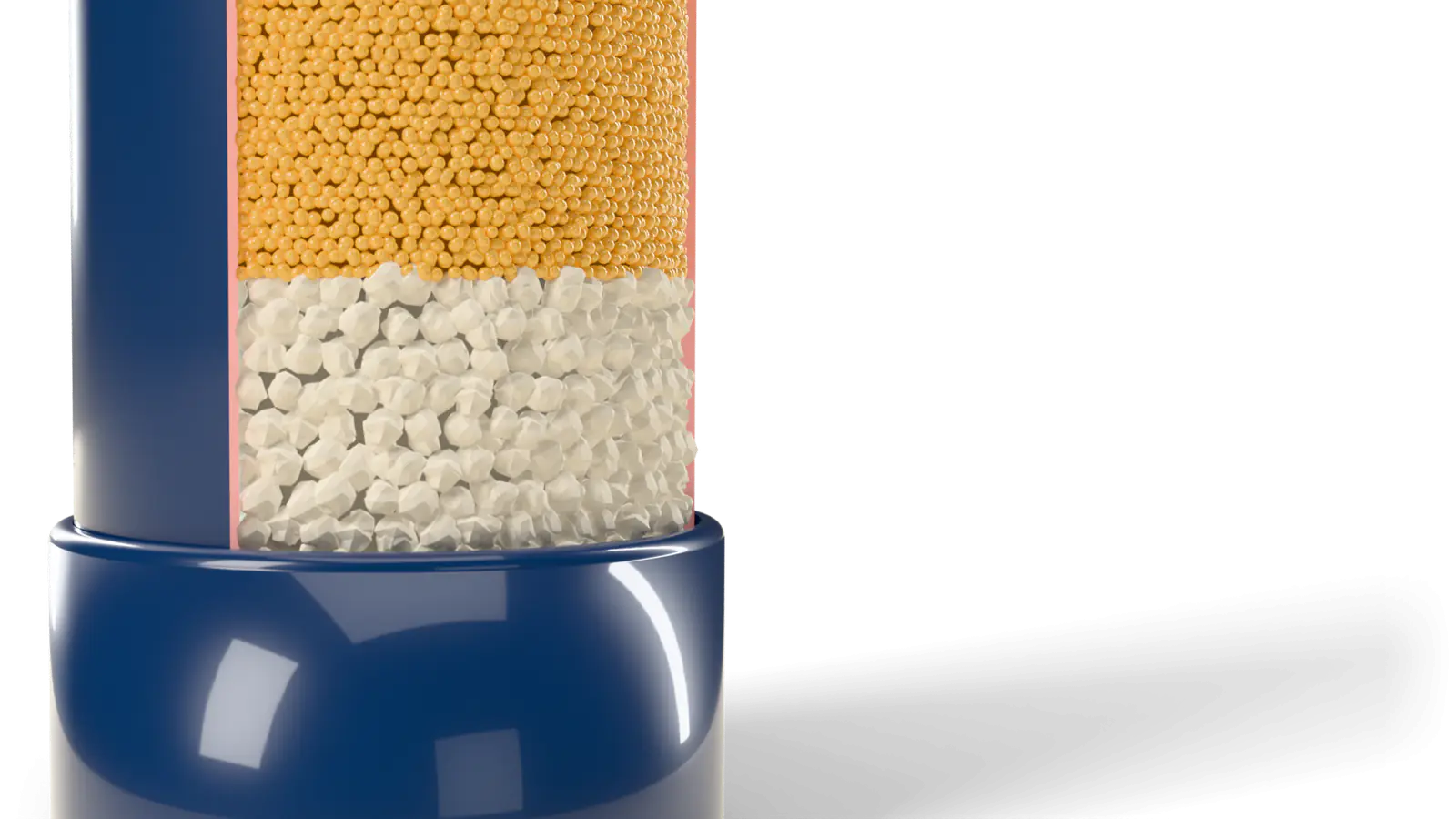
Washed gravel at the bottom spreads the water out, so the whole bed does its share of the work.

Tank size and what goes in it depend on your water and how much of it you use. We work that out with you before anything is quoted.
Illustration of how the system works. Your equipment is specified in your written recommendation.
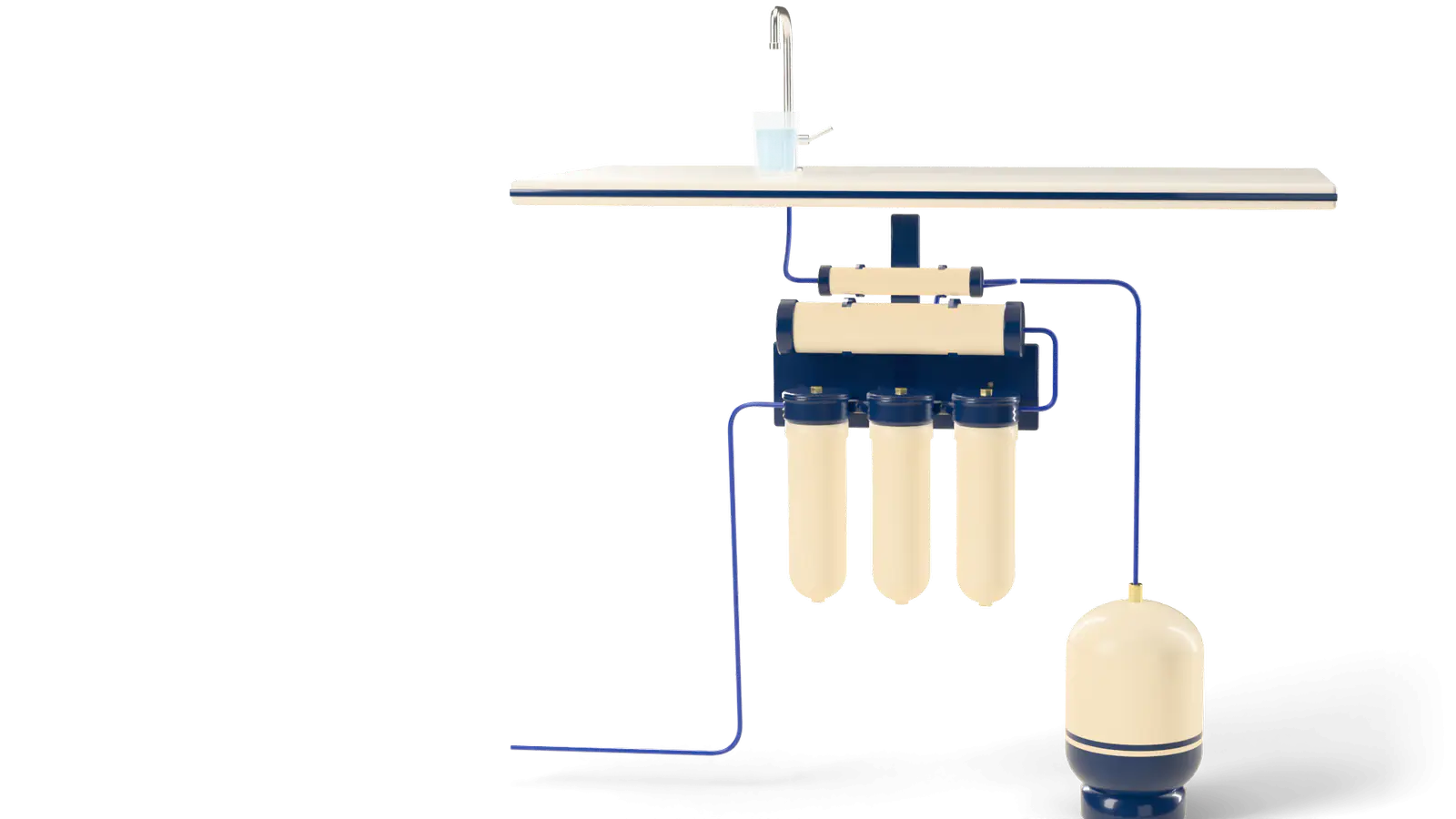
An under-sink system treats the water you drink and cook with, and gives it its own small faucet.
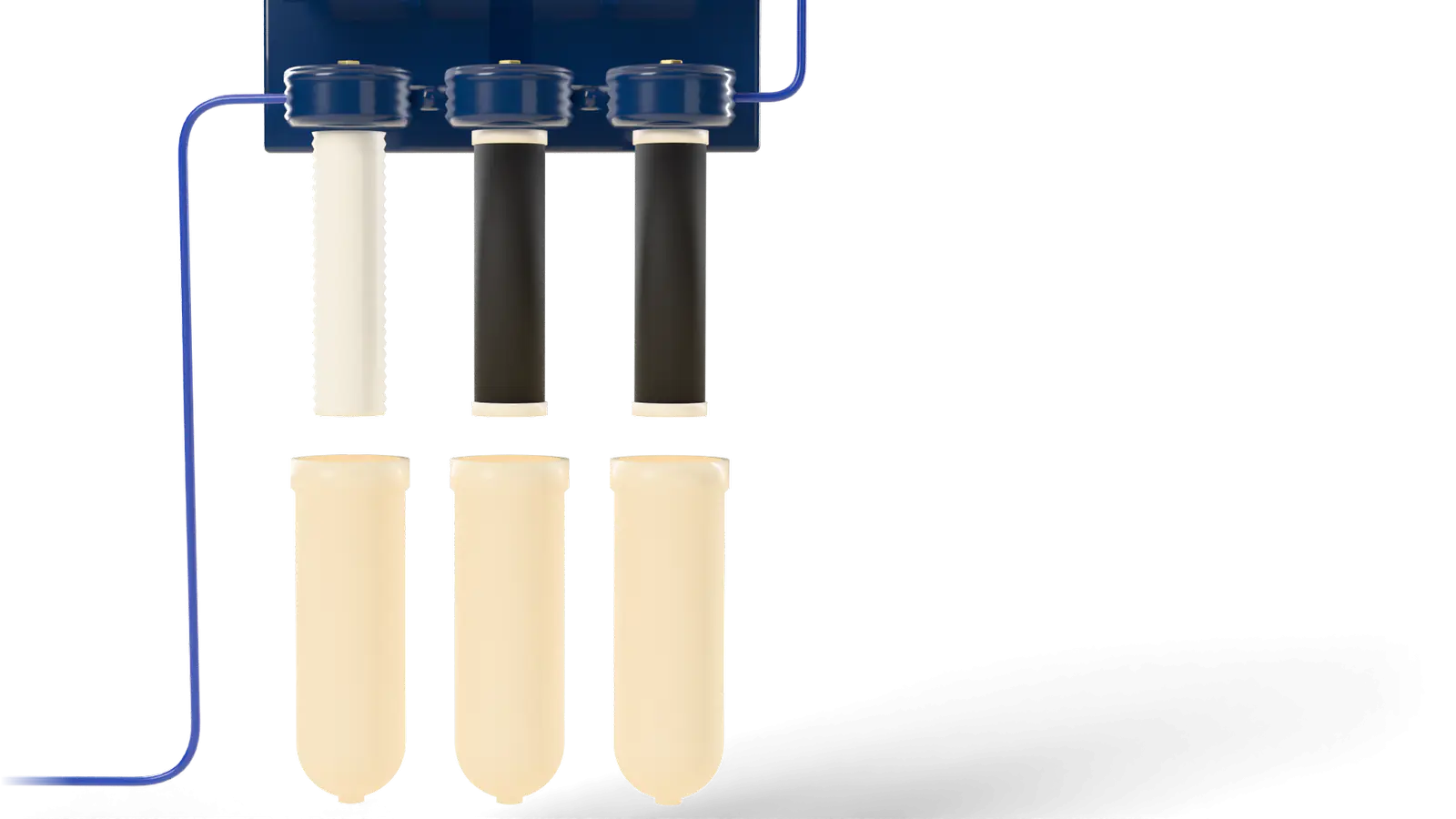
A sediment filter catches sand, rust and silt. Carbon blocks take out chlorine and the taste and smell that come with it.
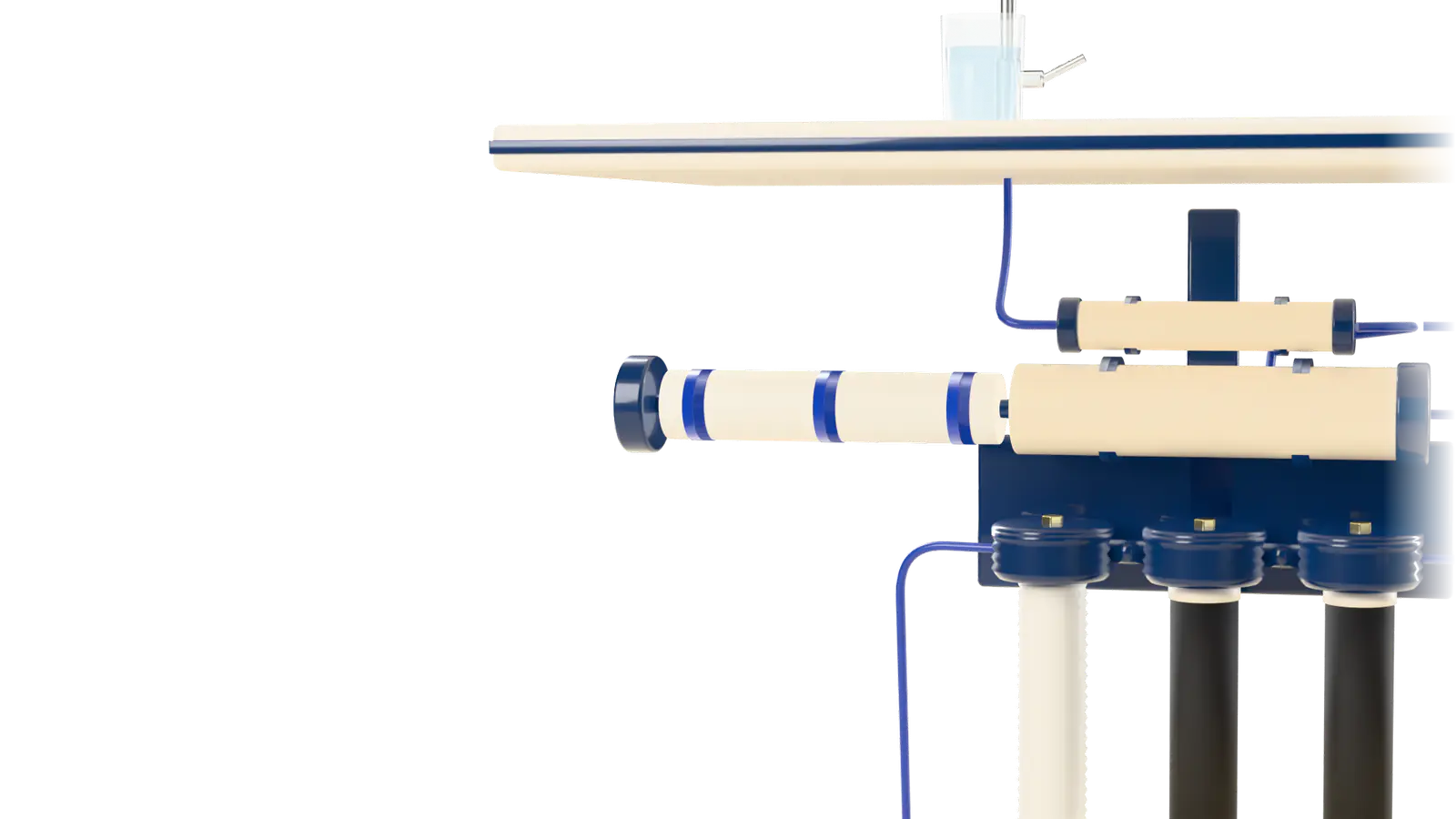
Reverse osmosis pushes water through a membrane fine enough to reduce dissolved solids such as arsenic, uranium and nitrate.
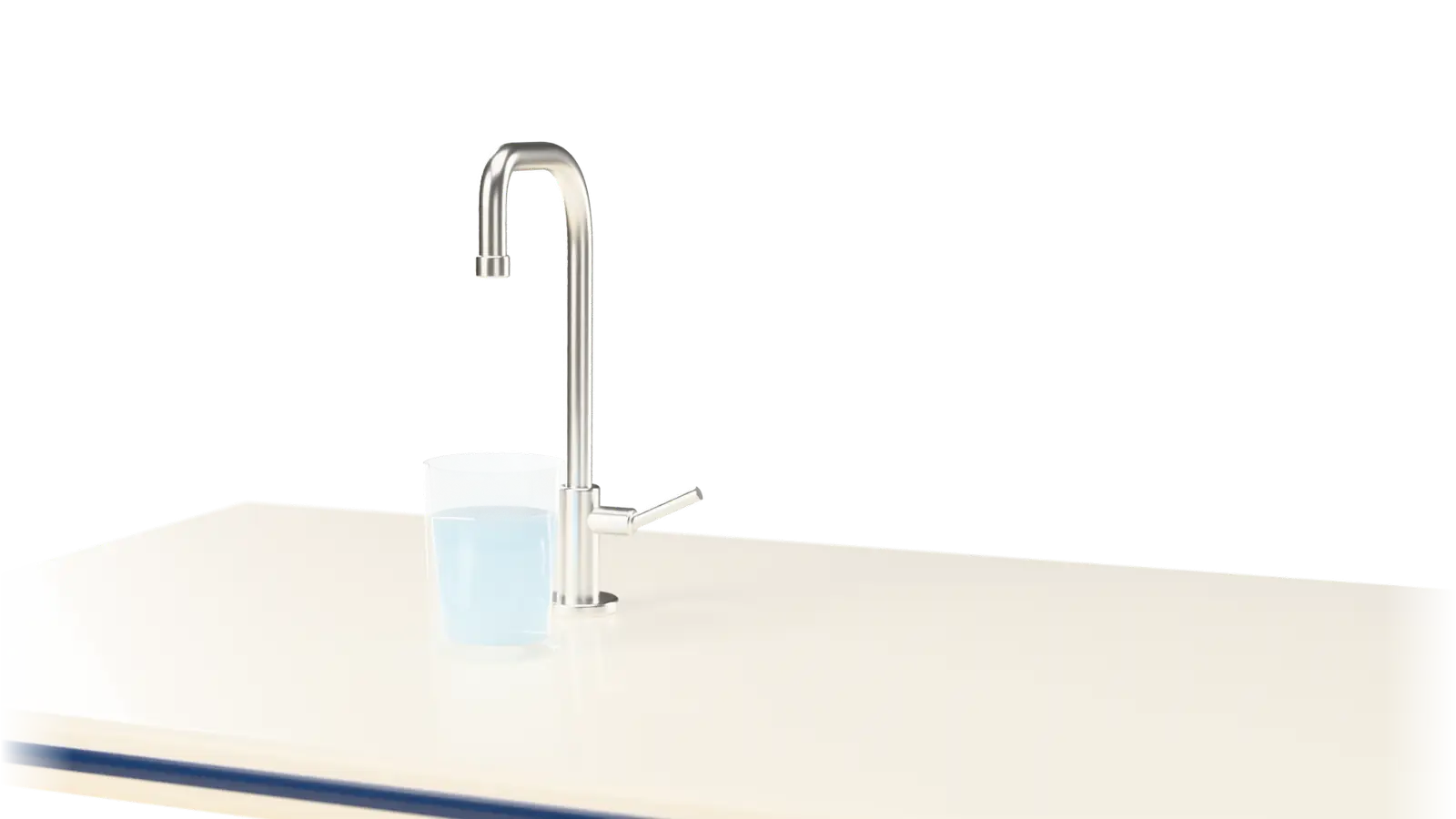
Treated water comes from a dedicated tap beside your main one, in a finish that matches your kitchen.
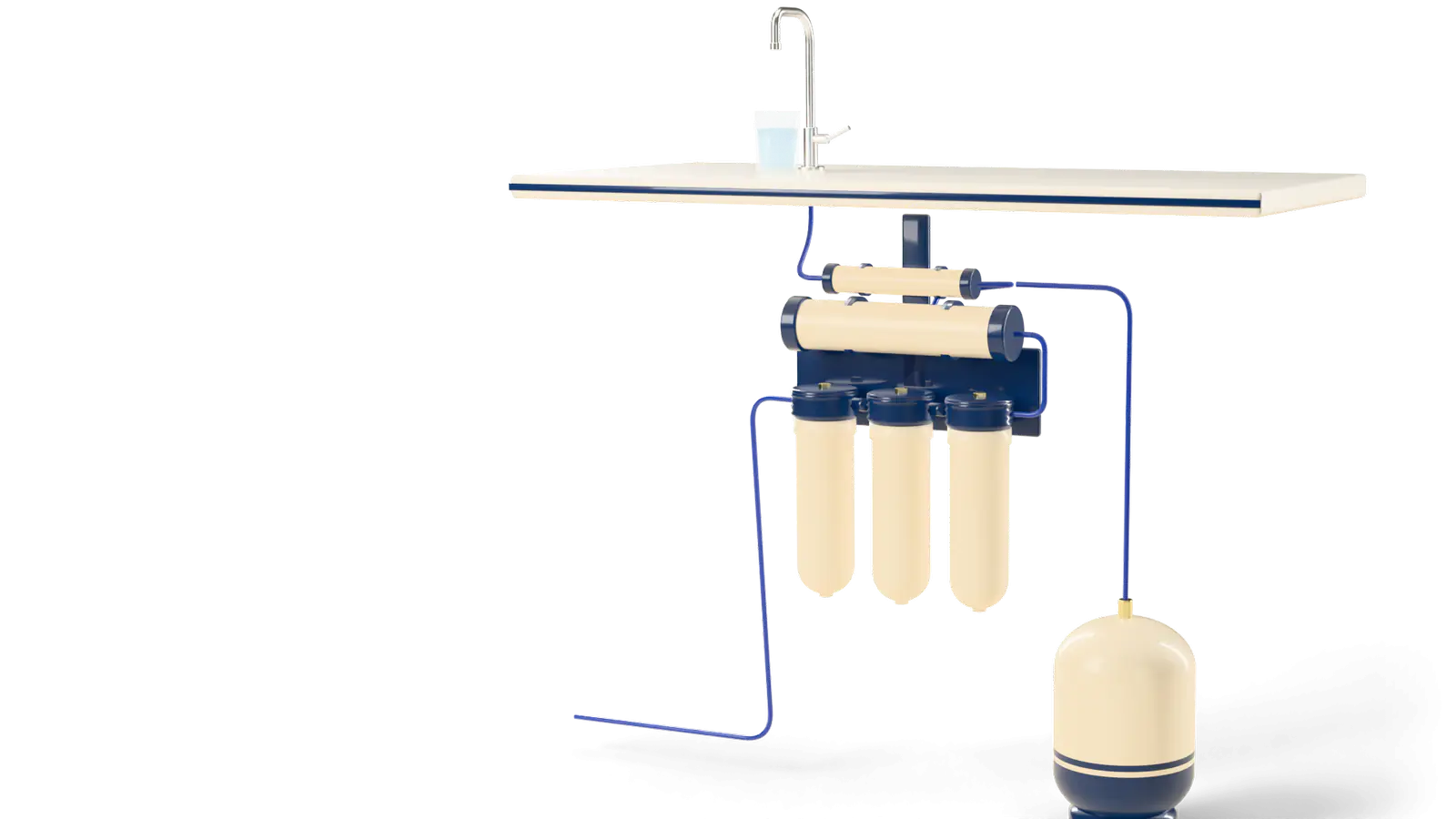
A storage tank keeps treated water ready, or a tankless unit makes it as you pour. We’ll look at the space under your sink together.
No sales visit.One written price.If you don’t need a system, we say so.
A short conversation about your water by phone or video, then one recommendation in writing.
How it worksMost homes start with one of two places. Pick the one that matches what you’ve noticed, and we’ll work out the rest together.
A whole-home system treats water where it enters your house. The right fit depends on what’s in your water and how much your household uses.
Whole-home filtrationAn under-sink system treats water at one fixture. Start here if drinking and cooking are your main concerns.
Under-sink filtrationPlain-language guides to each utility’s latest report, with every number linked to its source. Pick your city.
Three steps, none of them a sales visit. Read the longer version.
Send the short form or call. We look up the water report for your area before we talk.
A short conversation about your home and your water. Nobody comes to your house to sell.
The system, what it does, and one price with installation. If you don’t need one, we say so.
The three we hear most. There are more in the water guides.
Tell us what you’re noticing at home.


